


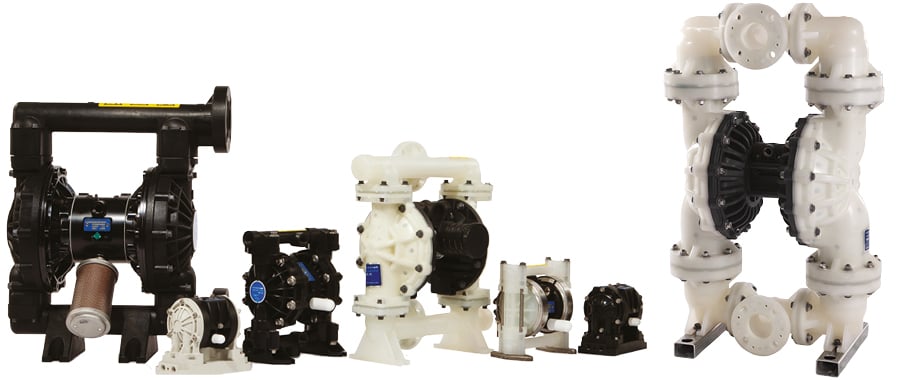
Air operated double diaphragm (AODD) pumps are known for their versatility and reliability. They can handle everything from corrosive chemicals and abrasive slurries to viscous products and shear-sensitive fluids, making them suitable for a wide range of industrial applications.
However, even the most robust diaphragm pumps can experience performance issues. In most cases, the cause is either related to the way the pump is being operated or installed, or simply the result of normal wear and tear over time. Fortunately, many common issues can be identified and resolved before they lead to costly downtime.
This guide covers some of the most common AODD pump troubleshooting questions, including diaphragm pump stalling, loss of prime, excessive air consumption and vibration, along with the likely causes of each issue.
For a snapshot of the most common diaphragm pump problems, causes and solutions, click here to view our diaphragm pump problem solving guide.
What causes an AODD pump to stall even when compressed air is available?
Diaphragm pump stalling is a common problem when troubleshooting air operated double diaphragm pumps. In many cases, the issue is not that air is unavailable, but that the pump is not receiving enough pressure or airflow to keep cycling properly.
Common causes include:
- insufficient air pressure or airflow under load
- blocked or undersized air supply lines
- dirty, wet or contaminated compressed air affecting the air valve
- a frozen or sticking air valve caused by moisture in the air supply
- excessive discharge pressure or a blocked discharge line
- worn diaphragms, air valves or internal seals.
Start by checking the air pressure at the pump while it is operating, rather than only at the compressor. Also inspect filters, regulators and air lines for restrictions or contamination.
Why does an AODD pump use more compressed air than expected?
Compressed air is often one of the highest operating costs when running an AODD pump. If air consumption suddenly increases, it usually indicates an issue with the pump, air supply or operating conditions.
Possible causes include:
- the pump is cycling faster than necessary
- air pressure is set higher than required
- air leaks within the supply line or fittings
- worn diaphragms or air valve components reducing efficiency
- high discharge pressure requiring more air to operate
- the pump is undersized and working harder to achieve the required flow.
Matching the pump correctly to the application and operating it at the lowest effective air pressure can help reduce compressed air consumption.
What causes an air operated diaphragm pump to lose prime during suction lift?
Losing prime during suction lift usually points to a problem on the suction side rather than a fault with the pump itself.
Common causes include:
- air leaks in the suction pipework or fittings
- excessive suction lift beyond the pump's capability
- blocked or undersized suction piping
- worn check balls or valve seats allowing liquid to drain back
- highly viscous products reducing suction performance
- air entrained within the liquid.
When troubleshooting for a diaphragm pump, inspect the complete suction line for leaks, restrictions or damaged hoses. Ensure the suction line is as short and direct as possible and confirm the pump is suitable for the required suction lift.
How do I know if an AODD pump is cavitating or experiencing suction starvation?
Cavitation and suction starvation are often confused because they produce similar symptoms, but both indicate the pump is not receiving liquid efficiently.
Signs include:
- reduced flow rate
- irregular cycling
- excessive noise
- increased vibration
- pulsating discharge flow
- premature wear of diaphragms, balls and valve seats.
These conditions are commonly caused by restricted suction pipework, excessive suction lift, blocked strainers, high viscosity fluids or operating the pump faster than liquid can enter the chambers.
Improving suction conditions, reducing restrictions and slowing the pump cycle rate can often resolve the problem before damage occurs.
What causes an air operated diaphragm pump to cycle rapidly but move very little liquid?
If the pump is cycling quickly but delivering little or no liquid, it is usually drawing air instead of product or the internal check valves are no longer sealing correctly.
Possible causes include:
- air leaks on the suction side
- worn or damaged check balls and seats
- split or damaged diaphragms
- restricted suction line
- pump speed exceeding the available liquid supply
- incorrect valve materials for the application.
When troubleshooting, inspect the diaphragms, valve assemblies and suction line before assuming the pump itself has failed.
What causes an AODD pump to vibrate excessively during operation?
While some pulsation is normal, excessive vibration often indicates that something within the installation or operating conditions needs attention.
Possible causes include:
- loose mounting or foundation
- unsupported pipework transferring vibration
- cavitation or suction starvation
- Operating the pump at an unnecessarily high cycle rate
- inconsistent compressed air supply
- worn diaphragms, balls, seats or air valve components
- lack of pulsation dampening where required.
Checking pipe supports, air supply and suction conditions will often identify the cause. In some systems, installing a pulsation dampener can help reduce vibration and improve flow consistency.
Preventing common diaphragm pump problems
Many AODD pump issues can be avoided through correct pump selection, proper installation and routine maintenance. Regularly inspecting diaphragms, check valves, air valves and seals can help identify wear before it affects performance.
It's also important to ensure the pump is correctly sized for the application and that the suction and discharge pipework are designed to minimise restrictions.
While AODD pumps are highly versatile and reliable, they aren't always the best solution for every application. Understanding the advantages and limitations of AODD pumps can help you select the right technology from the outset and avoid unnecessary performance issues. Read our guide to the advantages and disadvantages of a diaphragm pump to learn more.
If you're selecting a new pump, explore our range of Verderair air operated diaphragm pumps, available in hygienic, metallic and non-metallic configurations for a wide variety of industrial applications.
Need help with air operated double diaphragm pump troubleshooting?
If you've worked through these checks and your pump is still not performing as expected, the issue may be related to pump selection, operating conditions or worn components.
The team at Global Pumps can help identify the cause of diaphragm pump stalling, poor performance or excessive air consumption and recommend the most suitable solution for your application. Contact Global Pumps to speak with one of our pump specialists.