



Slurry pump troubleshooting begins by identifying the symptoms affecting pump performance, such as excessive wear, reduced flow, vibration, cavitation or increasing maintenance requirements. In most cases, these issues are caused by operating conditions rather than pump failure alone. Factors including incorrect pump selection, operating away from the best efficiency point (BEP), excessive pump speed, abrasive slurries, poor suction conditions and incorrect installation can all reduce performance and accelerate wear of critical components. Regular inspection, condition monitoring and selecting the correct slurry pump for the application can significantly improve reliability, reduce maintenance costs and extend equipment life. This guide explains the most common slurry pump problems, their likely causes and practical solutions to improve performance and maximise service life.
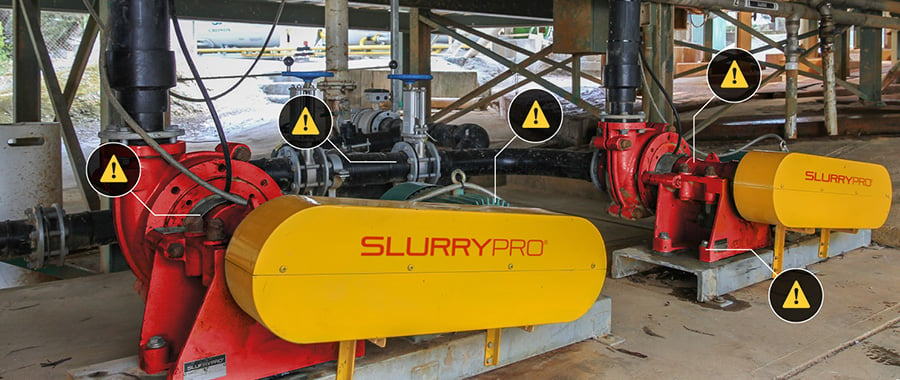
Common slurry pump problems at a glance
| Problem | Likely cause | Recommended solution |
|---|---|---|
| Excessive wear | Abrasive slurry, high pump speed, incorrect materials | Select appropriate wear materials, optimise pump speed, operate near BEP |
| Reduced flow or pressure | Worn impeller or liners, blockage, operating away from duty point | Inspect wear components, clear blockages, review pump selection |
| Cavitation | Poor suction conditions, insufficient NPSH | Improve suction design, reduce restrictions, review installation |
| Excessive vibration | Misalignment, cavitation, worn bearings, operating away from BEP | Check alignment, bearings, foundation and operating conditions |
| High maintenance costs | Premature wear, poor maintenance practices, incorrect pump selection | Implement preventative maintenance and optimise system design |
What causes excessive slurry pump wear?
Excessive slurry pump wear is most commonly caused by abrasive solids, incorrect pump selection, operating away from the pump's best efficiency point (BEP), excessive pump speed or selecting materials that are not suited to the slurry being handled. These conditions increase erosion of the impeller, casing, liners and other wet-end components, reducing both efficiency and service life.
Slurry pumps are specifically designed to handle abrasive and high-solids applications, but every pump has operating limits. When particle size, solids concentration or slurry velocity exceed the pump's design parameters, wear rates can increase significantly. In many cases, premature wear is not caused by poor equipment quality but by a mismatch between the pump and the application.
Selecting the correct pump size, hydraulic design and wear materials for the application is one of the most effective ways to reduce wear. The Global Pumps team works with customers to assess slurry characteristics, operating conditions and system requirements to recommend a solution that maximises wear life and minimises maintenance.
What role does pump speed play in wear and efficiency?
Pump speed has a direct impact on both wear and hydraulic efficiency. Higher pump speeds increase the velocity of abrasive particles travelling through the pump, accelerating erosion of the impeller, liners and casing while also increasing energy consumption.
Although increasing speed can temporarily deliver higher flow rates, it often comes at the expense of significantly shorter component life. Even relatively small increases in rotational speed can produce disproportionately higher wear rates because abrasive particles strike internal surfaces with greater force.
Operating a slurry pump at or close to its best efficiency point (BEP) provides the best balance between hydraulic performance, energy efficiency and equipment life. Where operating conditions have changed, reviewing pump speed, impeller diameter or system design may significantly improve long-term performance.
What causes a slurry pump to lose performance over time?
A slurry pump gradually loses performance as internal wear increases the clearance between hydraulic components. As wear progresses, pump efficiency decreases, resulting in lower flow, reduced pressure and higher energy consumption.
The impeller and wear liners are typically the first components affected by abrasion. As these components wear, more fluid recirculates internally instead of being transferred through the system. This reduces the pump's hydraulic performance and places additional load on the motor.
Loss of performance can also result from blockages, cavitation, worn bearings, incorrect pump speed or changes in slurry properties. Regular inspection of wear components allows maintenance teams to identify deterioration before performance declines significantly or unexpected failures occur.
How can maintenance costs be reduced?
Slurry pump maintenance costs can be reduced by selecting the correct pump for the application, operating close to the best efficiency point, monitoring wear components and performing preventative maintenance before failures occur.
Waiting until components fail often leads to higher repair costs, unplanned downtime and damage to surrounding equipment. A preventative maintenance program allows wear components to be replaced during planned shutdowns while reducing the likelihood of catastrophic failures.
Monitoring vibration, power consumption, flow rate and pressure can also provide early warning signs of developing problems. By identifying wear trends before failure occurs, maintenance teams can extend component life and optimise replacement intervals.
The Global Pumps team also recommends reviewing operating conditions whenever maintenance costs begin increasing unexpectedly. In many cases, relatively small adjustments to pump selection, operating speed or pipework design can substantially improve reliability and reduce lifecycle costs.
How can you tell whether a pump is oversized or operating away from its duty point?
An oversized slurry pump often operates well away from its best efficiency point, resulting in excessive recirculation, increased vibration, accelerated wear and unnecessary energy consumption.
Common signs of an oversized or incorrectly selected pump include frequent throttling of discharge valves, unstable flow, excessive vibration, higher than expected power consumption and repeated wear component replacement. These symptoms indicate that the pump may not be operating within its optimal performance range.
Reviewing the system duty against the pump performance curve is one of the most effective ways to determine whether a pump is correctly sized. A pump operating close to its BEP will generally provide improved efficiency, lower operating costs and longer equipment life.
If operating conditions have changed since the pump was originally selected, the Global Pumps team can review the application and recommend modifications that better match current system requirements.
What installation mistakes shorten pump life?
Incorrect installation can significantly reduce slurry pump service life by creating poor suction conditions, excessive vibration and premature component wear.
Common installation issues include undersized suction pipework, unnecessary bends or elbows immediately before the pump, poor alignment between the pump and motor, inadequate foundation support and insufficient flooded suction. These issues can restrict flow into the pump, increase turbulence and contribute to cavitation.
Pipework that places excessive stress on the pump casing can also shorten bearing and seal life. Proper pipe support and accurate alignment during installation help minimise vibration and reduce mechanical loads on rotating components.
Following manufacturer installation guidelines and reviewing the complete pumping system rather than the pump alone provides the best opportunity to maximise reliability and equipment life.
When should a slurry pump be repaired or replaced?
A slurry pump should be repaired when wear is limited to replaceable components such as the impeller, liners, bearings or seals. Replacement is generally recommended when the pump casing, shaft or other major structural components have reached the end of their service life or when operating requirements have changed significantly.
Repeated repairs without addressing the underlying cause of excessive wear often result in ongoing maintenance costs and reduced reliability. Reviewing the complete pumping system can identify whether changes to pump selection, operating conditions or installation will provide a more cost-effective long-term solution.
The Global Pumps team can assess existing equipment, identify the root cause of recurring performance issues and recommend the most practical approach based on the application's operating requirements.
Preventing slurry pump problems before they occur
Most slurry pump problems can be prevented through correct pump selection, proper installation and routine maintenance. Operating close to the pump's best efficiency point, monitoring wear trends and replacing components before failure occurs all contribute to improved reliability and lower operating costs.
Every slurry application is different. Factors such as particle size, solids concentration, flow rate, head pressure and slurry chemistry all influence pump performance and wear life. Selecting equipment specifically designed for these operating conditions provides the best opportunity to maximise efficiency and minimise maintenance.
If a slurry pump is experiencing excessive wear, reduced performance or increasing maintenance costs, the Global Pumps team can assess the application and recommend the most suitable solution to improve reliability and extend equipment life.
Frequently Asked Questions
What causes excessive wear in a centrifugal slurry pump?
Excessive wear is typically caused by abrasive solids, excessive pump speed, operating away from the best efficiency point, unsuitable wear materials or selecting a pump that is not matched to the application. Optimising pump selection and operating conditions can significantly extend component life.
How does pump speed affect slurry pump life?
Higher pump speeds increase particle velocity and accelerate abrasion of internal components. Operating at the correct speed improves efficiency while reducing wear and maintenance requirements.
Why is my slurry pump losing performance?
Performance usually declines because wear increases internal clearances within the pump, reducing hydraulic efficiency. Other common causes include cavitation, blockages, worn bearings or changes in slurry characteristics.
How can slurry pump maintenance costs be reduced?
Maintenance costs can be reduced through correct pump selection, preventative maintenance, routine inspections, condition monitoring and operating the pump close to its best efficiency point.
How can I tell if my slurry pump is oversized?
Frequent discharge valve throttling, unstable flow, excessive vibration, high power consumption and repeated wear issues are common indicators that a slurry pump may be oversized or operating away from its intended duty point.
What installation mistakes commonly shorten slurry pump life?
Poor suction pipe design, inadequate flooded suction, incorrect alignment, insufficient pipe support and inadequate foundations can all contribute to premature wear, cavitation and reduced equipment life.