



When a pump fails, the first question is whether it should be repaired or replaced. While replacement may seem like the most straightforward option, repairing a pump can often extend its life and reduce overall costs.
As a general rule, if the cost of repairing a pump is more than 80% of the cost of a new one, it may be more economical to replace it. However, there are several other factors to consider before making a decision.
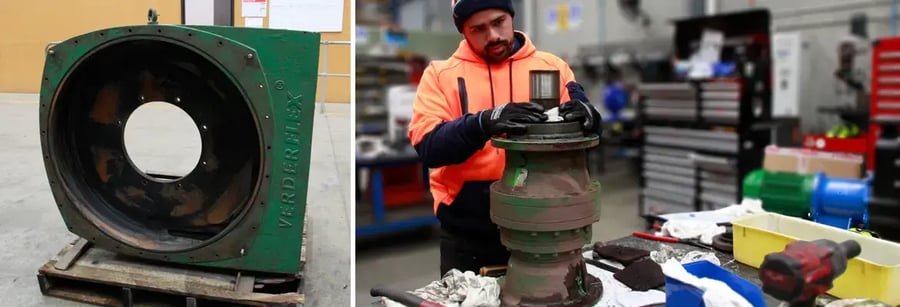
When should you repair a pump instead of replacing it?
Repairing a pump is often the most practical and cost-effective solution when the pump is still fundamentally sound and the issue is limited to specific components.
-
Operational familiarity
The maintenance personnel at their facility are often well-acquainted with the existing pumps. A good operator knows the idiosyncrasies with their equipment, they can hear and feel when a pump is working well or showing signs of wear. Replacing the pump can cause issues for operators, so holding spares on hand is a great solution to help keep that bond between operator and their equipment.
-
Budget considerations
Purchasing spare parts is typically classified as an operational expense, while buying a new pump is considered a capital expense. Repairs generally require less internal approval and can be actioned more quickly, making them a more practical option when fast decision-making is required.
-
Extended equipment lifespan
Repairing a pump instead of replacing it can significantly extend its service life. By maintaining and restoring key components, the overall lifecycle cost of the pump is reduced, allowing the equipment to remain in operation for many more years at a lower total cost.
-
Cost-effective for minor damage
Minor issues such as worn seals, hose degradation, or valve wear are typically inexpensive and straightforward to repair. In these cases, replacing individual components is far more cost-effective than purchasing a new pump.
-
System constraints
If the pump is already integrated into a system where modifications would be required to install a new unit, repair is often the more practical solution. Keeping the existing pump avoids additional costs related to pipework changes, mounting adjustments, or system redesign.
-
Pump criticality
Is the malfunctioning pump essential to your core operation? In some cases, repairing the pump, especially when spare parts are available, can restore operation faster than sourcing and installing a replacement unit.
-
Upgrade opportunity during repair
Consider using repairs to incorporate upgrades, such as converting from a cast iron impeller to a stainless-steel impeller to improve service life.
When should you purchase a new pump instead of repairing it?
Replacement becomes the better option when the pump can no longer deliver reliable performance, or when continuing to repair it creates more cost, risk, or downtime than installing a new unit.
-
When repair costs are getting too close to a new pump
If repairs start approaching around 80% of the cost of a new pump, it’s usually a sign that replacement should be considered. At that point, you’re spending a large amount of money without getting the benefit of a new unit, new warranty, or improved reliability. In many cases, it makes more sense to invest that money into a replacement rather than continuing to repair ageing equipment.
-
When the pump has ongoing or repeated failures
If the same pump keeps failing or requires frequent repairs, it can become unreliable. Even if each individual repair is manageable, the ongoing disruption adds up, more downtime, more labour, and more uncertainty in your operation.
-
Lead time for spare parts
How quickly do you need your pump operational again? If spare parts are not readily available or have long lead times, waiting for repairs may not be practical. In situations where downtime is costly, replacing the pump can be the faster option to get your system running again.
-
When the pump is no longer efficient or suitable
Over time, operational requirements can change. The current pump may no longer be the right fit for the application, or it may be running inefficiently compared to newer designs. Replacing the pump allows you to select a unit that better matches your current process, improving performance and reducing operating costs.
What common pump issues can be resolved with spare parts?
Common pump issues that may prompt the decision to purchase spare parts include:
-
Seal and Gasket Wear
Over time, seals and gaskets can wear out, leading to leaks. Replacing these components with spare parts can often resolve the issue and restore the pump's integrity.
-
Impeller damage
The impeller is a critical component in centrifugal pumps. Damage to the impeller, such as corrosion or erosion, can significantly impact performance. In many cases, replacing the impeller with a spare part is more cost-effective than buying a new pump.
-
Clogged or Worn-out Valves
Valves in diaphragm or reciprocating pumps can become clogged or worn, affecting the flow of liquids. Replacing valves with service kits is a common practice to restore proper pump function.
-
Tubing or Hose Wear
In peristaltic pumps, the tubing or hoses that come in direct contact with the fluid can experience wear and degradation. Regularly replacing these components with OEM spares helps maintain consistent performance.
-
Bearing failure
When replacing seals or other components, it’s often a good idea to replace the bearings, even if they haven’t failed. This can be done as a preventative measure to ensure the new spares last as long as possible.
-
Corrosion
Corrosion in pump components, especially those exposed to corrosive liquids, can lead to inefficiencies and malfunctions. Investing in a corrosion-resistant coating such as MetaLine can help extend the service life of your pumps.
To learn more, check out our 5 things to check when your pump doesn't work or top pump problems checklist.
Do you have the option to repair, or are you forced to replace?
When you invest in a good quality pump, you are doing much more than buying a brand, you are investing in long-term reliability and access to spare parts for years to come.
This means that in many cases, continuing to repair and maintain the pump using spare parts is a practical and cost-effective approach, allowing you to extend the life of your equipment while minimising downtime.
However, this approach depends heavily on the quality of the original pump. Purchasing cheap equipment may reduce upfront costs, but when spare parts are unavailable or unreliable, repairs become difficult or impossible.
In these situations, operators are often left with no choice but to purchase a new pump, sometimes sooner than expected.
In conclusion, deciding between repairing or replacing your pump requires careful consideration of several factors beyond just cost. By weighing the urgency of the repair, the extent of the damage, the pump's criticality to your operations, and potential upgrade opportunities, you can make an informed choice that minimises downtime and maximises cost-efficiency.
Need help deciding whether to repair or purchase a new pump?
At Global Pumps, we specialise in industrial pump repairs, new pump supply or servicing for brands including Verderflex, Techniflo, Slurrypro, Verderair, Toro, Roto, Prominent, Inoxpa and Talbo .
Our expert technicians can assess your pump and recommend the most cost-effective solution, whether that’s industrial pump repair or a full replacement. Contact us today for a free consultation and keep your operations performing as expected.