



Mining sites place extreme demands on pumping equipment. Abrasive slurries, high solids content, corrosive reagents, variable flow conditions, and remote site maintenance all make pump reliability critical.
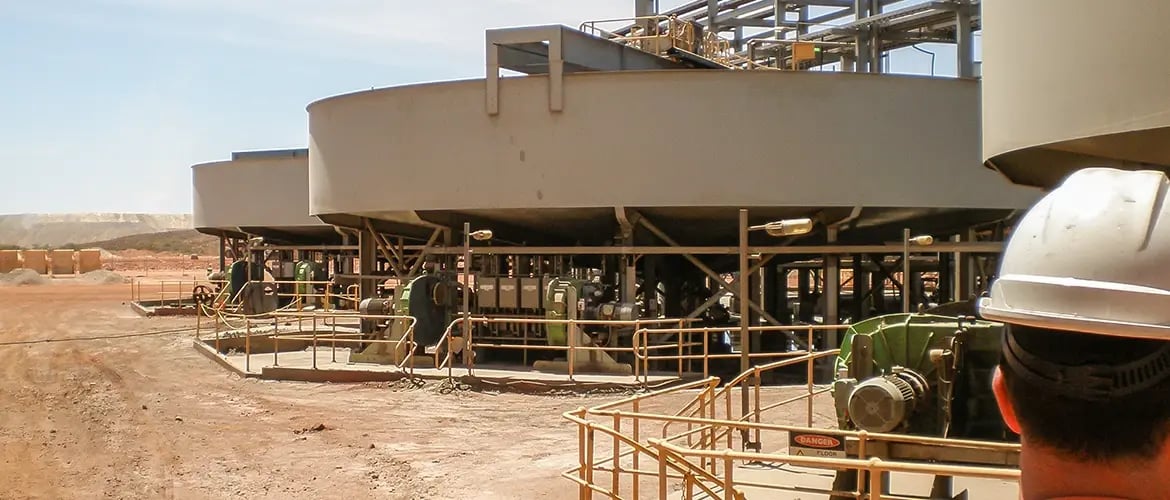
If you’ve worked on a mine site, you already know the problem. Slurry eats pumps. Whether it’s thickener underflow, tailings transfer, concentrate slurry, or lime dosing, abrasive slurries don’t just wear components over time. Seals fail, impellers erode, and maintenance quickly becomes a constant part of the operation.
So the real question is not simply which pump works, but which pump keeps working with the least maintenance.
For Australian and New Zealand mining operations, Verderflex peristaltic hose pumps are a proven solution. By containing the product entirely within the hose, wear is controlled and maintenance is simplified, making them well suited to demanding mining applications.
Global Pumps is the Australian distributor for Verderflex and supplies, engineers, and supports peristaltic pump solutions for mining operations across Australia.
Why peristaltic hose pumps are ideal for mining?
Peristaltic hose pumps are well suited to mining applications because the pumped fluid is fully contained within the hose. Unlike centrifugal pumps, abrasive slurry does not come into contact with seals, valves, impellers, or other internal moving parts.
A peristaltic hose pump works by compressing the hose to move fluid, meaning the hose becomes the main wear component. Wear is controlled and predictable, rather than spread across multiple internal parts exposed to abrasive slurry.
From a maintenance perspective, this is a big shift:
👉 Instead of chasing multiple failure points, you’re managing one known wear item.
Where are Verderflex peristaltic hose pumps used in mining?
Verderflex peristaltic hose pumps are commonly used across mining and mineral processing applications, including thickener underflow transfer, tailings transfer, concentrate slurry transfer, reagent dosing, lime slurry dosing, flocculant and polymer dosing, filter press feed, sludge and wastewater transfer, and abrasive process slurry transfer.
These are typically the applications where high solids, abrasive media, and difficult operating conditions place the most stress on pumping equipment.
What other operational benefits do Verderflex hose pumps offer?
In addition to handling abrasive slurry, peristaltic hose pumps provide a number of operational benefits that can improve efficiency and reduce overall costs on site.
Save water
In many slurry applications, additional water is introduced as solids increase to maintain pump performance.
This is where limitations can appear. Once slurry density rises above around 30% solids (specific gravity ~1.3), efficiency typically drops and more process water is required to keep the system operating.
Peristaltic hose pumps can handle much higher solids, with specific gravities up to 1.6 to 1.8 (around 80% solids), without needing the same level of dilution.
For a plant processing around 75 tonnes per hour at 65% solids, replacing one slurry pump with a peristaltic hose pump can result in water savings of over 1,100 million litres.
This is because peristaltic hose pumps can operate using around 25% of the process water required for the same duty.
Save power
In addition to reducing water usage, peristaltic hose pumps can also lower energy consumption. In a thickener underflow application processing 75 tonnes of ore per hour, a Verderflex VF125 operating at full flow uses around 35 kW, compared to approximately 70 kW for the same duty using other pump types. This can reduce annual power demand by more than 210 MWh while lowering operating costs and reducing pressure on site power infrastructure.
Save space
Where higher solids can be pumped directly, fewer downstream processing stages are required.
The ability to handle higher solid content reduces the need for post-thickener filtration or dilution systems, which leads to a reduced physical plant footprint.
This provides a double benefit, lowering initial capital investment while also creating potential savings in ongoing operating costs.
Reduce Pollution
Mining operations often handle chemicals such as cyanide, which need to be properly contained to avoid environmental damage.
If leaks occur, they can contaminate surrounding land and water.
Pumps that rely on seals can develop leaks over time, especially in harsh conditions.
Peristaltic hose pumps are seal-less, which helps reduce the risk of leakage and keeps these fluids contained.
Reduce damage and chemical use
Some mining and mineral recovery processes are sensitive to shear and particle breakdown during pumping.
Peristaltic pumping is inherently gentler on the process fluid than other pumping actions, helping maintain particle size and process stability in applications such as reagent dosing, flocculant transfer, and precious metal recovery.
New recovery processes using live cell cultures to free gold from sulphide ores can particularly benefit from the gentle pumping action of a peristaltic hose pump, improving yields and, as a side benefit, reducing the use of cyanide.
The low shear stress also reduces the need for additives to prevent flocculation, which can lower chemical consumption, waste generation, and post-processing requirements.
Save on maintenance costs and reduce downtime
Many mining slurries are highly abrasive or corrosive, which leads to frequent wear on pump components.
In applications where impellers are exposed to the process fluid, maintenance and replacement costs can become significant, particularly when specialised materials are required.
Peristaltic hose pumps have only the hose in contact with the fluid. With modern elastomer-lined hoses, service life is often measured in months rather than days in abrasive slurry applications.
Hoses can also be replaced in situ, reducing downtime and simplifying maintenance.
The elastomers used in Verderflex hoses have been proven in mining applications to withstand the abrasive and corrosive characteristics commonly found in slurry handling.
Why choose Verderflex over other peristaltic pump brands?
While peristaltic pumps share the same operating principle, performance in mining applications largely depends on hose design and durability.
The Verderflex hoses are specifically designed to minimise the effect of fatigue, resulting in an extremely long hose service life. The hoses go through a high-tech manufacturing process to ensure a maximum concentration and consistency of reinforcement fibres in the hose wall, the secret to the exceptional life of the Verderflex hose. These Verderflex hoses can be retrofitted into other existing peristaltic pumps and have been tried and proven to give substantially longer service life.
Why do mining maintenance teams prefer Verderflex peristaltic pumps?
Predictable Maintenance
Hose wear can be monitored and planned. This reduces reliance on reactive maintenance caused by unexpected component failure.
Reduced Spare Parts
There is no need to maintain stock of multiple internal components such as seals, valves, or impellers.
Simpler Servicing
Hose replacement is generally more straightforward than rebuilding conventional slurry pumps, reducing service time and complexity.
Dry Run Capability
Verderflex pumps can operate without fluid for short periods without damage, which is useful during start-up, shutdown, or intermittent flow conditions.
Tolerance to Air Entrainment
Air in the line does not significantly affect pump performance, which is beneficial in applications such as thickener underflow.
What If Higher Flow or Redundancy Is Required?
For higher flow rates or critical processes, Global Pumps supplies Duplex Peristaltic Pump systems, where two hoses operate in parallel.
Where have Verderflex pumps been proven in the field?
Looking at real installations gives a better understanding of how these pumps perform in practice.
Remote Brine Pumping for a Western Australia mining site
A remote site required pumping saturated brine with no access to electrical power and limited maintenance support.
The fluid was abrasive and highly corrosive, creating reliability issues for conventional equipment.
A diesel-driven Verderflex peristaltic pump was installed on a skid for mobility and ease of use.
The hose design isolated wear to a single component, reducing maintenance requirements on site.
This provided a reliable, self-contained solution suited to remote and harsh operating conditions.
Thickener Underflow for an Australian mine site.
A mine site required improved reliability in a thickener underflow application handling abrasive concentrate slurry.
The process involved high solids (up to 72%) and dense slurry from multiple sources, causing frequent maintenance issues.
Verderflex VF80 hose pumps were installed to replace existing slurry pumps.
System improvements were made to optimise flow and reduce pulsation and blockages.
The result was hose life up to 4,000 hours and a significant reduction in maintenance time.
Why Work with Global Pumps for peristaltic pumps in Australian mining sites?
With 50 years of industry experience, Global Pumps is the Australian distributor for Verderflex and supports mining operations with application-based pump selection, local technical support, spare parts and servicing, and custom-engineered pump systems designed for Australian mining conditions.