



When most people think about pump reliability, their first focus is the pump itself — impellers, casings, and materials of construction. But in many cases, motor performance is just as critical.
A common issue we see in the field is motor overheating, and it often comes down to poor temperature control rather than a mechanical failure.
One factor that is frequently overlooked is motor cooling, especially when pumps are operated with variable speed drives (VSDs). As motor speed reduces, airflow from the cooling fan also drops. This allows heat to build up and becomes a common cause of motor overheating in industrial pumping systems.
That’s where forced cooling comes in.
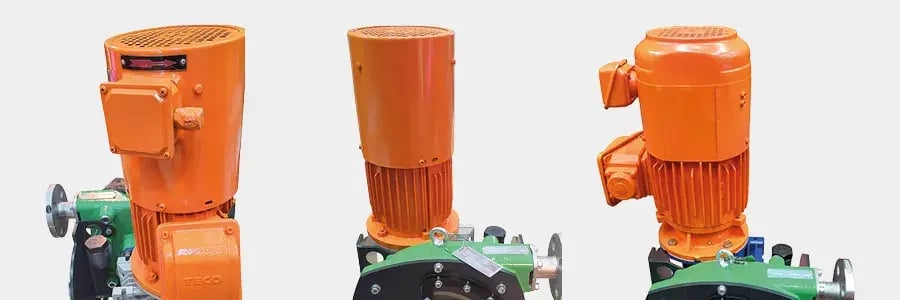
What Is a Forced Cooling Fan?
Most industrial pump motors are Totally Enclosed Fan Cooled (TEFC) motors. These are fitted with a shaft-mounted fan that rotates with the motor and draws air across the motor housing to remove heat.
It’s a simple and effective design — as long as the motor is running near full speed.
When the motor is slowed down using a VSD, the shaft-mounted fan also slows down. This reduces airflow and limits cooling performance.
Less airflow means less heat removal, and this can lead to overheating, even when the pump itself appears to be operating under lower load.
A forced cooling fan solves this problem. Instead of being driven by the motor shaft, it is powered independently and runs at a constant speed. This provides consistent airflow regardless of motor speed.
These systems are commonly referred to as:
- forced ventilation systems
- VSD cooling fans
- VFD cooling fans.
Why Does Cooling Matter So Much?
Excess heat is one of the fastest ways to shorten motor life.
When a motor overheats, it can lead to:
- premature breakdown of winding insulation
- bearing damage
- increased electrical losses
- unexpected downtime and failures.
Many of these issues are linked to inadequate airflow or poor ventilation around the motor.
Keeping the motor cool protects critical components and helps ensure reliable, long-term operation.
When Should You Use a Forced Cooling Fan?
Not every motor requires forced cooling, but there are clear situations where it becomes important.
-
Extended low speed operation on VSDs
If a motor spends significant time at reduced speeds (often below ~60–70% of rated speed, depending on motor design), the standard shaft-mounted fan may not provide enough airflow.
A forced cooling fan ensures consistent cooling even at low speeds.
-
Continuous or heavy-duty applications
Motors running under constant load generate more heat. Without sufficient cooling, this heat can build up over time and lead to overheating.
-
High ambient temperatures
Hot environments such as mining sites, processing plants, or outdoor installations reduce the margin for safe motor operation. In these conditions, effective ventilation becomes critical.
-
Enclosed or poorly ventilated spaces
Acoustic enclosures, underground pump rooms, or tight installations can trap heat around the motor. Adding forced ventilation improves airflow and helps control temperature.
Why This Can Catch People Out
In many applications, particularly with centrifugal pumps, reducing speed lowers the hydraulic load on the pump.
But at the same time, motor cooling is also reduced.
This creates a mismatch — the motor may appear to be under less load, but its ability to remove heat has also decreased. In some cases, this can result in the motor reaching thermal limits even though the pump is not operating at full capacity.
Benefits of Forced Cooling Fans
Adding a forced cooling fan provides several practical benefits:
- Consistent cooling performance at any speed
- Longer motor and bearing life
- Reduced risk of unplanned downtime
- Improved overall system reliability
In systems operating with VSDs, a dedicated cooling solution helps maintain stable operating temperatures and protects the motor over the long term.
Motor Cooling Risk by Pump Type
Motor overheating risk is generally related to how the motor is operated rather than the pump design itself. However, some applications are more likely to experience cooling issues.
| Pump type | Likelihood of cooling issue | Cause |
| Centrifugal pumps | Very common | Often run with VSDs at reduced speed. Lower motor speed reduces airflow from the shaft fan. |
| Peristaltic pumps | Application dependent | Common in dosing applications where a wide flow range is required. When operated over a large speed range on a VSD, extended low-speed running can reduce cooling and increase overheating risk. |
| Magnetic drive pumps | Possible | Use standard electric motors. If operated at low speed on a VSD, cooling is reduced. |
| Large industrial pumps (any type) | Higher likelihood | Larger motors generate more heat and rely heavily on effective airflow for cooling. |
Forced cooling fans are not required for every pump installation. But in the right conditions, they are a simple and effective way to protect your equipment.
Low speed operation, high ambient temperatures, and restricted airflow are all common contributors to motor overheating. Improving ventilation with a forced cooling system helps stabilise motor temperature and reduce the risk of failure.
At Global Pumps, we’ve seen the difference proper motor cooling can make in extending equipment life and preventing costly downtime. If you’re unsure whether your motor requires forced cooling, it’s worth reviewing the operating conditions before issues arise.