

Most people use peristaltic pumps every day without realising one of their most useful features. You can run them in reverse.
If you are using a reversible peristaltic pump, you already have the ability to move fluid in both directions. The real question is whether you are actually using that capability to your advantage.
In this guide, we will walk through what happens when you reverse your pump, why it matters, and how it can improve efficiency across different industries.
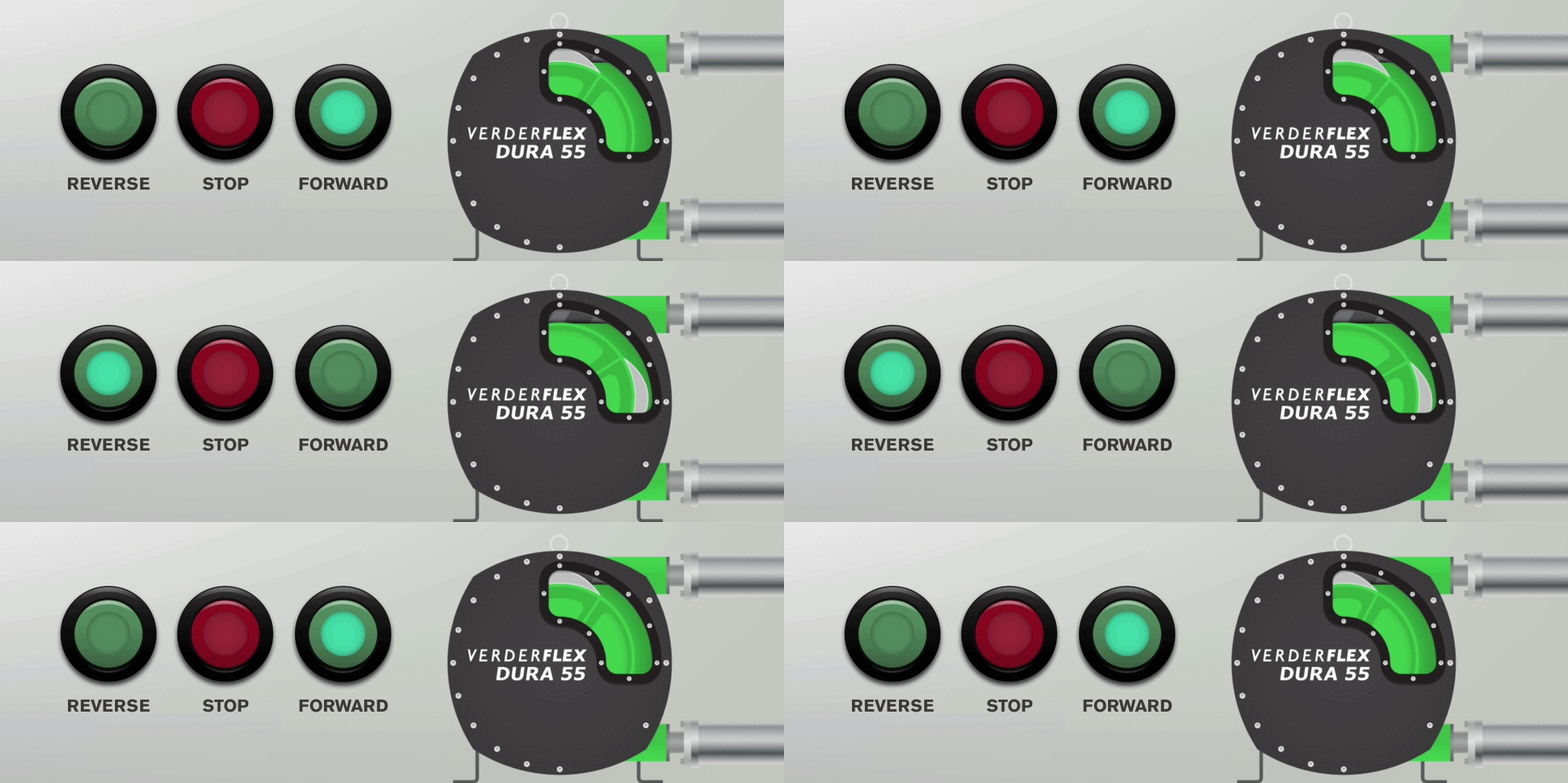
A peristaltic pump works by rotating shoes that compress flexible hose or tubing and push fluid forward. When you reverse the motor, those shoes simply turn the other way. The result is that the fluid flows backward through the same line.
There are no valves involved and no complicated changes required. The fluid stays contained within the hose, so direction is controlled entirely by the motor.
This is what makes a reversible peristaltic pump such a practical and reliable option when you need bidirectional flow.
A lot of systems are set up to run in one direction only. That works, but it often means missed opportunities to improve efficiency or solve problems quickly.
Reversing your pump can make a real difference in day to day operation.
One of the simplest and most useful applications is clearing lines.
Instead of setting up separate flushing systems, you can reverse the pump and push fluid back through the line. This helps remove leftover product, clear pipelines before maintenance, and assist with cleaning processes.
In practical terms, this means less downtime and fewer components in your system. In industries like water treatment or food processing, that simplicity can save a lot of time.
In many operations, product left in the line is lost product.
By reversing the pump, you can bring that material back into the tank or process. This is especially valuable when dealing with expensive chemicals, additives, or food products.
Over time, even small recoveries can add up to noticeable cost savings and better overall yield.
Things do not always go to plan. Overdosing or transferring the wrong amount can happen in any system.
Instead of shutting everything down and manually correcting the issue, reversing the pump gives you a quick way to pull fluid back and adjust.
This makes it easier to respond to problems on the spot and keep operations running smoothly.
In industries like mining, blockages are part of the job. Slurries and viscous materials can settle and restrict flow.
Reversing the pump can help loosen and move those materials, restoring flow without needing to dismantle the system.
This is where peristaltic pumps really stand out. They already handle abrasive fluids well, and reverse operation adds another layer of flexibility.
In mining, reversing helps manage slurry lines and reduce downtime from blockages.
In water and wastewater treatment, it can prevent chemical buildup and keep dosing lines clear.
In food and beverage, it helps recover product and maintain hygienic processes.
In chemical processing, it gives operators more control when handling aggressive fluids.
Even though reversing is straightforward, there are a few things to keep in mind.
Hose wear is one of them. Frequent reversing can increase fatigue depending on your operating conditions.
Flow rates can also vary slightly between forward and reverse, which matters in dosing applications.
You also need to make sure your pump and system are rated for the pressures involved, and that your motor or drive allows smooth direction changes.
Ensure that there are no check valves in the line that you are reversing into, as this will rapidly cause the pump to fail.
Not all pumps handle reversing well.
Centrifugal pumps are not designed for controlled reverse flow. Diaphragm pumps can run in reverse, but they often need extra components to do it properly.
Peristaltic pumps keep things simple. Reversing is part of how they work, which makes them a practical and reliable option when you need flow in both directions.
It is worth testing reverse flow during commissioning so you understand how your system behaves.
Using programmable drives makes reversing smoother and more controlled. Regularly checking hose condition will help avoid unexpected wear issues.
Most importantly, make sure operators understand when and why to use reverse. That knowledge is what turns a feature into real value.
At Global Pumps, we supply peristaltic pump solutions across Australia, supporting a wide range of industries including mining, water and wastewater, food and beverage, and chemical processing.
Whether you are handling abrasive slurries, dosing chemicals, transferring sensitive food products, or managing aggressive fluids, selecting the right pump for your application is key to performance and reliability.
Working with our team gives you access to practical guidance on pump selection, system setup, and operation. With the right support, you can better understand how to run your pump efficiently, extend its lifespan, and get the most value out of your system. Send your enquiry here.
If you need some guidance on how to select the right pump then you’re not alone! There’s such a wide range of pumps in Australia, from centrifugal pumps to hose pumps to diaphragm pumps. The options available to you can make it a difficult choice, so we’ve created this special guide to help step you through the process of selecting the ideal pump for your requirements.

Head Office
12 Selgar Avenue Tonsley
South Australia 5042
Follow us