Global Pumps supplies froth pumps for mining, mineral processing and heavy-duty slurry applications where froth and entrained air can affect pump performance.
Used in applications such as flotation circuits, reject streams, sample streams, PSA and OSA systems, iron ore processing and abrasive mineral slurry transfer, froth pumps are designed to handle slurry with high air content more effectively than standard slurry pumps.
Froth pumps help improve transfer efficiency, reduce unnecessary wear and lower the risk of premature pump failure by managing the impact of air entrainment within the slurry.
Each unit can be built to suit your technical specifications, site requirements and process conditions.
Froth pumps are designed for slurry applications where the mixture contains liquid, solids and a high level of entrained air.
In standard slurry applications, centrifugal pumps are primarily selected to move liquid and suspended solids. Frothy slurry is more difficult because a large portion of the mixture can be air. When too much air enters a standard centrifugal pump, it can reduce flow, affect efficiency, create unstable operation and accelerate wear on internal components.
Froth pumps are designed to manage these conditions by improving the way aerated slurry is handled. Depending on the application, this may be achieved through a horizontal froth pump design or a vertical froth tank arrangement.
Each froth pump can be built to suit project requirements, including duty point, slurry characteristics, froth factor, materials of construction, wear protection and site installation requirements.
Features:
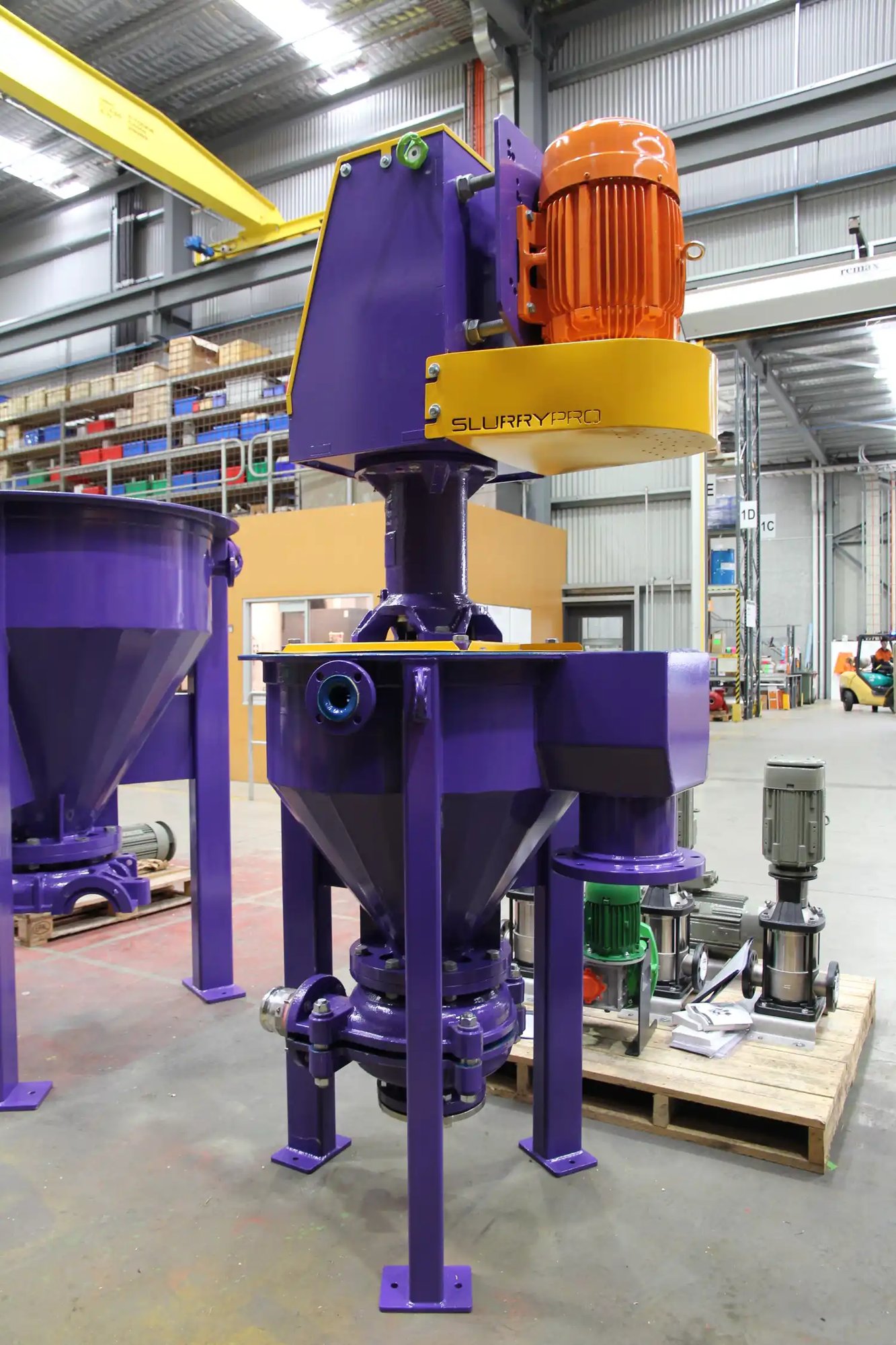
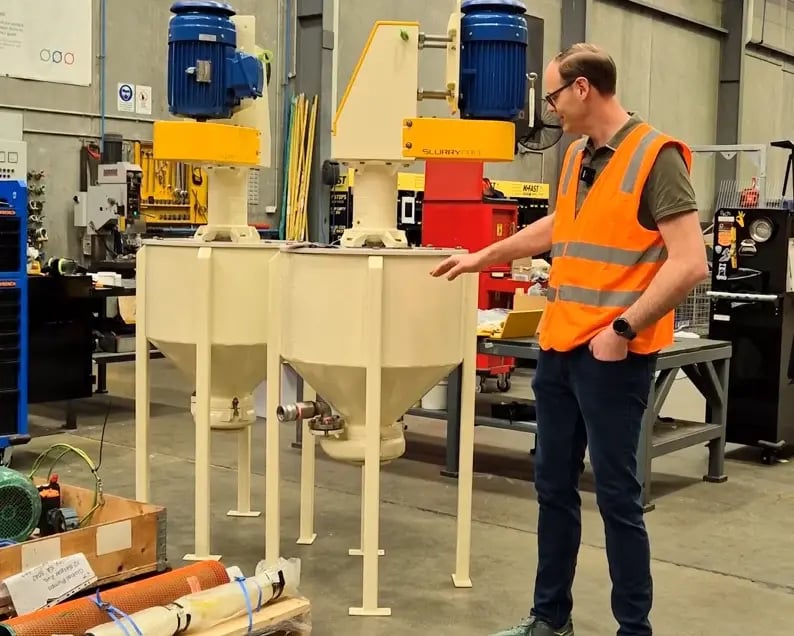
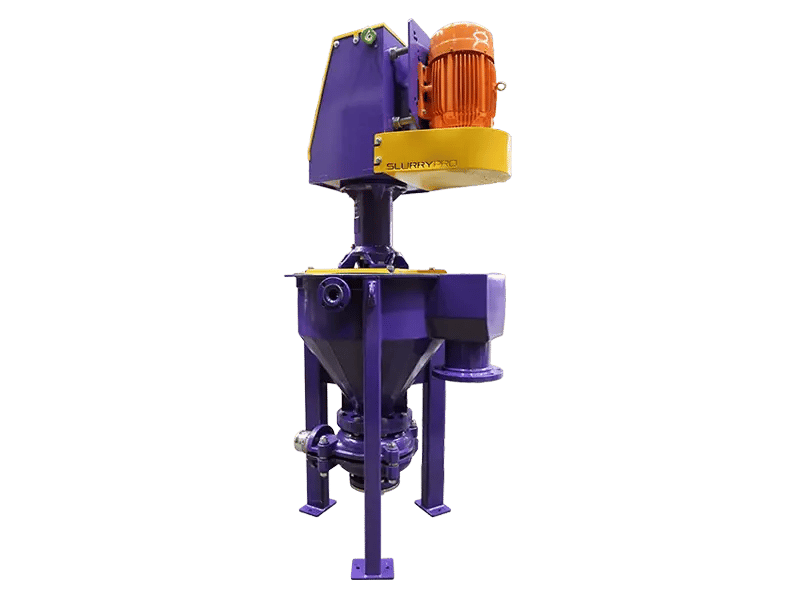
SlurryPro Vertical froth pumps are suited to higher-froth applications where entrained air needs to be released before the slurry reaches the pump.
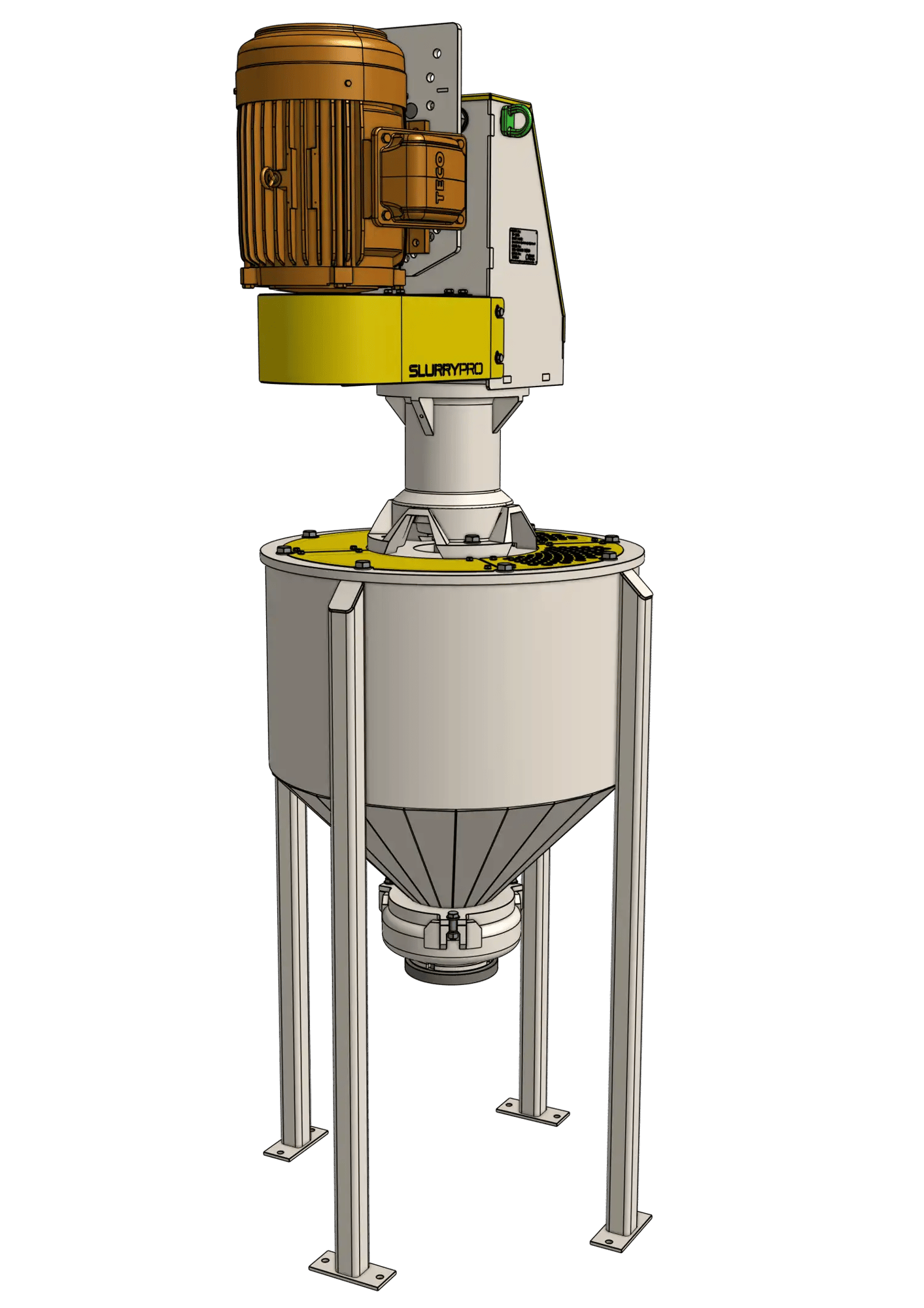
The slurry enters the froth tank tangentially, creating a vortex that directs heavier liquid and solids down into the pump while released air escapes upwards.
Wet-end material options include Natural Rubber, High Chrome Iron and CD4MCu.
SlurryPro Vertical froth pumps are available with outlet sizes up to 200 mm and capacities up to 300m3/hr, depending on the selected configuration and operating conditions.
SlurryPro Horizontal froth pumps are suited to frothy slurry duties where the site layout, pipework and maintenance access favour a horizontal pump arrangement.
They use froth-handling hydraulics to move aerated slurry more effectively than a standard slurry pump.
Horizontal froth pumps may be configured for retrofit applications, helping suit existing pump footprints and connections with minimal modification where applicable.
Wet-end material options may include High Chrome Iron, rubber-lined components, and CD4MCu, depending on slurry characteristics and site requirements.
They are available with discharge sizes up to 150 mm, depending on the selected model and duty requirements.
Froth pumps are designed to reduce the impact of entrained air on pump performance.
In vertical froth pump systems, the slurry enters the froth tank tangentially, creating a vortex inside the conical inlet. This swirling action pushes the heavier solids and liquid towards the outside of the tank, where they move down into the pump.
At the same time, released air moves towards the centre of the vortex and escapes to atmosphere along the pump shaft. This helps the pump receive a higher proportion of liquid and solids, rather than trying to move excessive air.
Horizontal froth pumps manage frothy slurry through their pump design and hydraulic configuration. They are selected where the installation layout, duty conditions and process requirements are better suited to a horizontal arrangement.
Froth pumps are commonly used in mining, mineral processing and heavy-duty slurry applications where froth, air entrainment and abrasive solids are present.
Flotation circuits generate froth as part of the mineral separation process. This frothy slurry can contain high levels of entrained air, making it difficult for standard slurry pumps to maintain stable performance. Froth pumps are used to transfer this aerated slurry more effectively within the process.
Reject streams can contain slurry, solids, water and froth that need to be transferred away from the process. In some plants, multiple reject streams may operate at the same time, increasing the volume and complexity of the duty. Froth pumps are suitable for these conditions where air content and abrasive solids are both present.
Sample streams are used in mineral processing plants to analyse process performance and product quality. These streams can include frothy or air-entrained slurry, especially when connected to process monitoring equipment. Froth pumps can help transfer these streams reliably where standard slurry pumps may struggle.
Particle Size Analysers and On-Stream Analysers are commonly used in processing plants to monitor slurry characteristics and support process control. The reject or return streams from these systems may include froth, water and fine solids. Froth pumps can be used to manage these streams and support continuous operation.
Iron ore processing can involve abrasive slurry with fine solids that place high wear demands on pumping equipment. When froth or entrained air is also present, the duty becomes more challenging. Froth pumps can be custom built with suitable materials and wear protection options for iron ore slurry applications.
Abrasive mineral slurry transfer requires pumps that can manage solids, wear and difficult process conditions. When air becomes trapped in the slurry, standard pump performance can be affected. Froth pumps are suited to applications where both slurry abrasion and air entrainment need to be considered.